
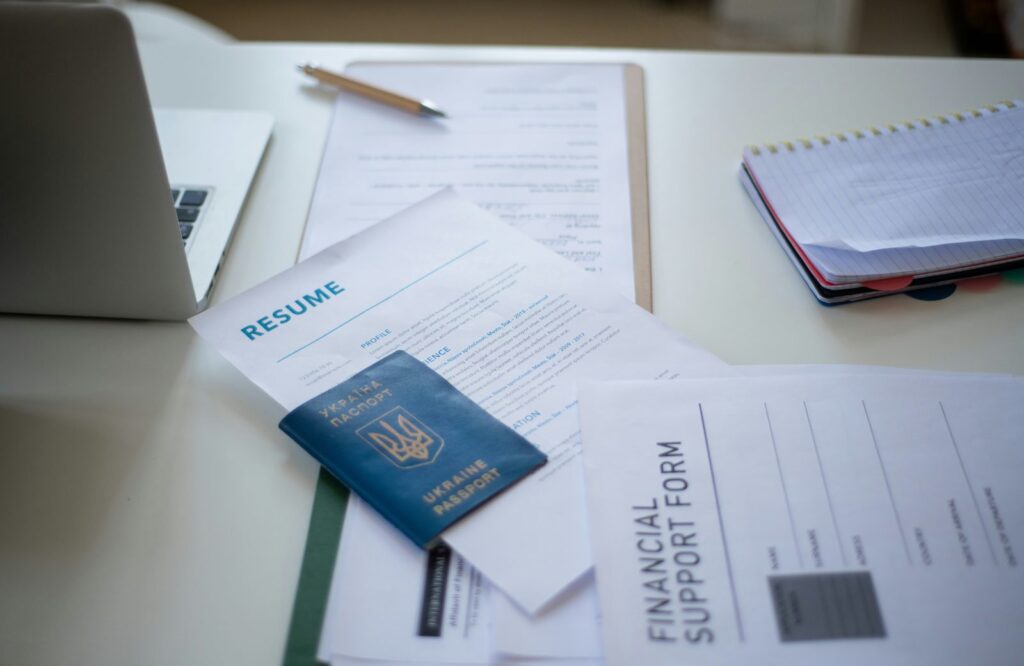
A study permit refusal letter is a strange kind of heartbreak. Months of planning, an acceptance letter from a Canadian school, a whole family’s hopes — and then a single paragraph that begins, “I am not satisfied that you have sufficient and available financial resources…”
Here is what I tell almost every family who brings me one of these letters: a refusal for insufficient funds is one of the most fixable reasons a Canadian study permit gets refused. It is rarely about how much money exists. It is almost always about how clearly that money was shown.
This guide explains why these refusals happen, how much money Canada actually expects you to show in 2026, and how to rebuild a reapplication that answers the officer’s concern head-on.
Key takeaways
- A study permit can be refused when a visa officer is not satisfied you have sufficient and available funds — a requirement set out in section 220 of the Immigration and Refugee Protection Regulations (IRPR).
- For 2026, a single applicant studying outside Quebec generally needs to show CAD $22,895 for one year of living costs — plus the first year of tuition, plus travel. The amounts are added together, not overlapped.
- You can reapply after a refusal immediately — there is no mandatory waiting period. But reapplying with the same weak evidence usually produces the same result.
- The fix is almost always better documentation: proof that the funds are available (not just a snapshot balance), a credible source and history for the money, and — if someone else is funding you — solid proof of that person’s financial capacity and their relationship to you.
- A focused submission letter that names and answers the exact refusal reason materially strengthens a reapplication.
Why are study permits refused for “insufficient funds”?
Under section 220 of the IRPR, an international student must satisfy the officer that they have enough money to pay their tuition, support themselves (and any family members who come with them), and pay for transportation. The key words are sufficient and available.
In my experience, a “funds” refusal is almost never because the family is poor. It is because one of these things went wrong:
- The balance appeared, but the history did not. A large deposit that lands in an account a week before applying reads as borrowed money staged for the application. Officers look for funds that have been accumulated over time.
- The money was not clearly available to the student. Funds locked in a business, a third party’s account, or an illiquid asset are not obviously available to pay next semester’s tuition.
- A sponsor was named, but not proven. “My uncle will support me” means little without evidence that the uncle can — and that he really is the uncle.
- Tuition was never addressed. An application that shows living costs but says nothing about how a year of tuition will be paid leaves an obvious gap.
- No source was explained. Officers are trained to ask a simple question: where did this money come from, and can I trust it will still be there?
How much money do you need for a Canadian study permit in 2026?
As of 2026, a single applicant studying outside Quebec generally needs to demonstrate CAD $22,895 to cover one year of living costs. That figure is on top of:
- your first year of tuition, and
- your travel costs to and from Canada.
These are additive. If your tuition is, say, $15,000, you are demonstrating roughly $22,895 + $15,000 + travel — not $22,895 total.
Two important caveats:
- IRCC updates the living-cost figure every year using Statistics Canada data, so treat this as a snapshot and confirm the current number on canada.ca before you file.
- Quebec sets its own, higher requirement for students destined to Quebec institutions.
Think of the published figure as a floor, not a target. A file that shows comfortably more than the minimum, well-documented, is far more persuasive than one that lands right on the line.
A refusal is not the end — why reapplying works
Every study permit application is decided on the file in front of the officer at that moment. That is precisely why reapplying works: a fresh application, with materially stronger and better-organized evidence, is judged on its own merits.
You will need to disclose the previous refusal, and the officer can see your history — but a past refusal is not a permanent bar. What changes the result is not a softer officer; it is a stronger file.
Five ways to strengthen your proof of funds on a reapplication
1. Show funds that are available, not just present. Move beyond a single balance letter. Provide four or more months of account history so the officer can see the money was there over time and is genuinely accessible.
2. Document where the money came from. Tie the funds to a credible source — salary, business income, the sale of a property, years of savings. A clean paper trail neutralizes the single most common concern: the unexplained lump-sum deposit.
3. If a family member is funding you, prove capacity and relationship. A sponsor’s promise is only as strong as its proof. Support it with the sponsor’s income, bank records, and evidence of assets such as property and business ownership — and with documents that establish the family relationship itself. A sworn affidavit of financial support, exhibiting those documents, can carry real weight because it puts the sponsor’s commitment on the record under oath.
4. Pay what you can up front — and show it. Paying your tuition deposit (or the full year), or purchasing a Guaranteed Investment Certificate (GIC), does double duty: it proves the funds are real and available, and it signals genuine intention to study.
5. Answer the refusal directly in a submission letter. Do not leave the officer to rediscover your case. A concise letter that names the previous refusal reason and walks the officer, document by document, through the new evidence is one of the highest-value pages in the package.
What this looks like in practice
In one recent matter, our firm helped a family whose teenage child had been refused a study permit because the officer was not satisfied the funds were sufficient and available. The money was real — a close relative in Canada was funding the studies — but the original application had shown little more than a bank balance.
We rebuilt the financial picture from the ground up: a sworn affidavit of financial support from the relative, backed by evidence of their income, business ownership, and property; proof that tuition had been paid; and a submission letter that addressed the refusal reason directly and tied every document to it. The reapplication presented the same underlying funds — but this time they were sufficient, available, and documented.
Every matter is different, and no lawyer can promise an outcome. But in my experience, clarity and evidence are almost always what move a file.
Frequently asked questions
Can I reapply immediately after a study permit refusal?
Yes. There is no mandatory waiting period after a study permit refusal. You can reapply as soon as you are ready — but you should only reapply once you have materially stronger evidence than last time, not simply resubmit the same package.
Does a previous study permit refusal hurt my chances?
You must disclose previous refusals, and officers can see your immigration history. A prior refusal is not a permanent bar, however. A well-documented reapplication that directly addresses the earlier concern is assessed on its own merits.
Can a relative or friend sponsor my Canadian study permit?
Yes. A parent, another relative, or a sponsor can fund your studies. To rely on their support you must document both the sponsor’s financial capacity (income, bank history, assets) and your relationship to them. A sworn affidavit of support with supporting exhibits is a strong way to present this.
How do I find out exactly why my study permit was refused?
Beyond the refusal letter, you can request your GCMS (Global Case Management System) notes through an Access to Information (ATIP) request. The officer’s notes usually reveal the specific concern — which tells you exactly what your reapplication must fix.
How much money do I need for a study permit in 2026?
For 2026, a single applicant outside Quebec generally needs to show CAD $22,895 for living costs for one year, plus the first year of tuition and travel costs. IRCC adjusts the living-cost figure annually, and Quebec sets a higher amount, so confirm the current requirement on canada.ca before applying.
About the author
Natalie (Ningjing) Zhang is the founder of BridgePoint Law Professional Corporation, an Ontario immigration and refugee law firm. An immigration lawyer licensed by the Law Society of Ontario, and an immigrant herself, she helps students and families with study permits, refusals, and reapplications across Canada. BridgePoint Law serves clients in English and Mandarin.
If your study permit was refused for insufficient funds, book a consultation at bridgepointlaw.ca — bring your refusal letter and, if you can, your GCMS notes.
Related reading: What International Students Need to Know in 2026 · Sending Your Child to a Canadian School: A Guide to Study Permits for Minors
Ask us about your matter
Tell us where your file stands and we will reply within two business days. Please do not send documents or identification numbers in this first message.
This article is general legal information, not legal advice, and reflects the rules in effect when it was written. Immigration requirements change; confirm the current rules on canada.ca or with a licensed immigration lawyer before you act.