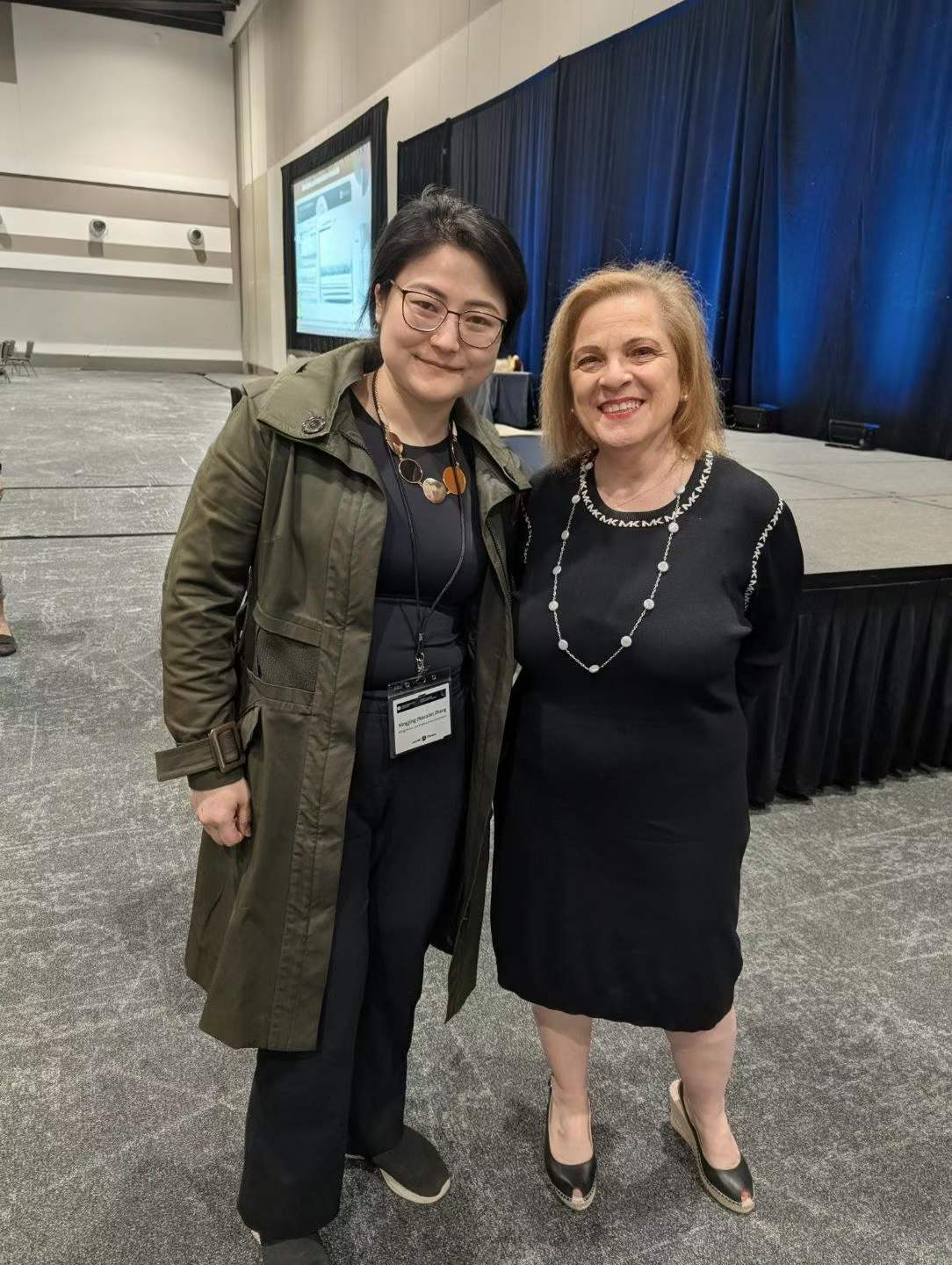
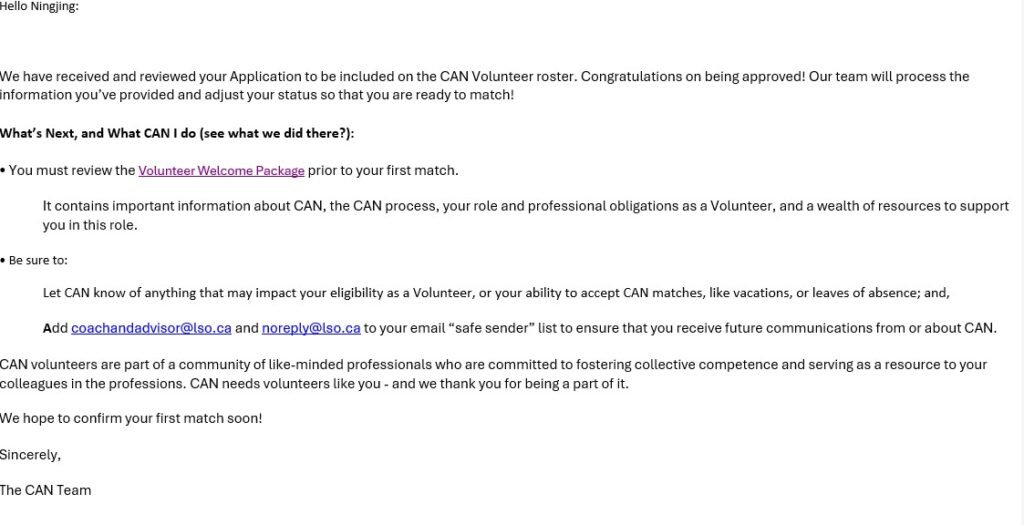
When the Law Society of Ontario invited me to join the Coach and Advisor Network as a Coach this year, my first instinct was to say no.
I am a refugee-turned-lawyer. I was called to the Ontario bar five years ago. Most lawyers in the CAN program have practised for fifteen, twenty, thirty years. What could I possibly offer?
I said yes because of my mentor.
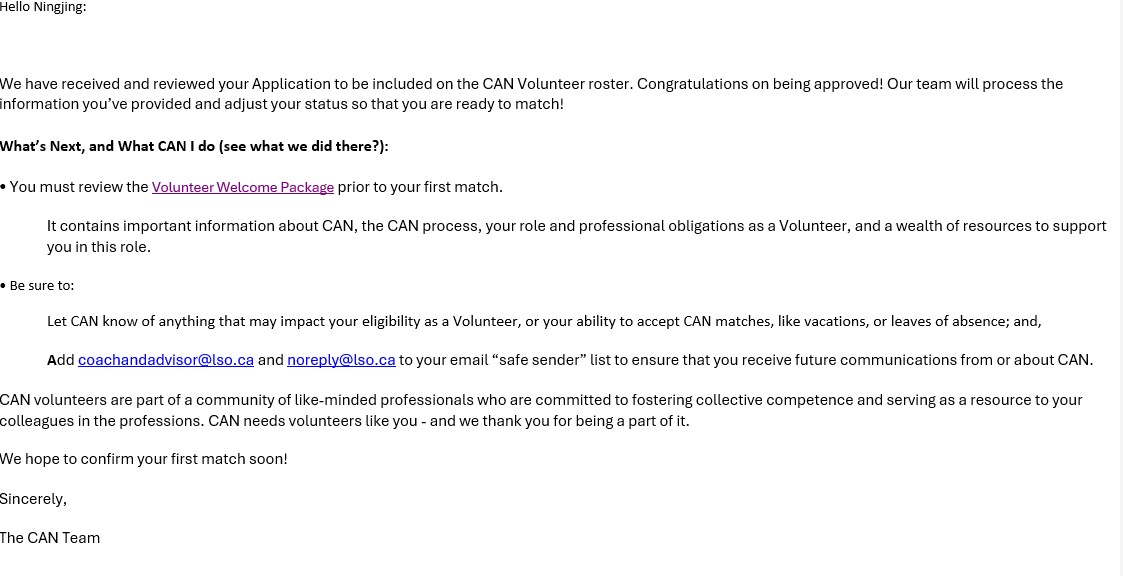
The question that changed how I practise immigration law
I met him through the CAN program three years ago. He had practised refugee law in Toronto for over twenty years. I was a brand-new immigration lawyer in Kingston, drowning in client files, trying to figure out how to run a firm.
In our first call, he asked me one question:
“When your refugee claimant client has a Canadian-born baby — have you told her she can apply for the Canada Child Benefit?”
I had not.
I knew the CCB existed. I had not thought about it as part of my immigration file. I assumed it was something CRA dealt with, that someone else would tell my client, that it had nothing to do with the refugee claim sitting on my desk.
He explained, quietly, that for many of his refugee claimant families with Canadian-born children, the CCB was the difference between paying rent and going to a shelter. He told me to check the eligibility rules. He told me to put a one-line reminder on my intake form.
That was the entire conversation. Maybe ten minutes.
The next week, I added one question to my refugee intake form: “Do you have Canadian-born children?” The week after that, I started routinely flagging CCB eligibility for refugee claimant clients with Canadian-born children — pointing them to the Service Canada office, helping them gather the documents, walking them through the application if needed.
That single mentor conversation has, by my rough estimate, put hundreds of thousands of dollars into the hands of my refugee claimant clients over the last three years. Children fed. Rent paid. Crises averted.
What the CAN program actually does
The Law Society of Ontario’s Coach and Advisor Network is one of the quieter programs the LSO runs. It is not glamorous. There are no awards ceremonies, no certificates. It is just senior lawyers volunteering their time to talk to junior lawyers about real practice problems.
Coaches handle ongoing, recurring conversations. Advisors handle one-off questions. Both are confidential, free, and outside any disciplinary or evaluative context.
For a lawyer in solo practice — which is what most newly called immigration lawyers in Ontario end up doing within five years — CAN is one of the few structured ways to access the kind of mentorship that, in a big firm, would happen organically over coffee with a senior partner.
I would not be running BridgePoint Law today without it.
Why I said yes to becoming a Coach
Five years into practice, I am still not a senior lawyer by any reasonable measure. But I have built a refugee and immigration practice that handles RPD, RAD, PRRA, Direction to Removal, Federal Court judicial review, and the cross-border work that touches Canada, the United States, and China. I have done that as a sole practitioner. In two languages other than English. In a city — Kingston — where there are almost no other refugee lawyers.
That last part is what made me say yes.
There is a particular kind of immigration lawyer the CAN program serves well: the one who finds herself running a practice in a smaller city, with a client base that does not look like downtown Toronto. The lawyer whose Mandarin or Cantonese is her working language, not “translation available.” The lawyer who took her hearing from a remote location because the courthouse was four hours away. The lawyer whose first refugee claimant client could not pay her, and she ran the file anyway.
Those lawyers exist. They are coming up behind me. If the CAN program asked me to coach them — even five years into practice — it would have been ungrateful to say no.
Three things I am thinking about as a new Coach
I am still figuring out the Coach role. But three things have been on my mind as I have started taking new mentees this spring.
One. The most useful thing a mentor can do is ask the question the mentee has not thought to ask. My mentor did that with the Child Tax Benefit. I am trying to do that with referral fees, with conflict-of-interest screening on China-related files, and with how to price a sponsorship file when the client is paying in three currencies.
Two. Solo immigration practice is not lonely because there are no other lawyers. It is lonely because the other lawyers are too busy to talk. The CAN program creates a protected hour of conversation. That hour matters more than any CLE I have ever taken.
Three. Pay it forward. My mentor told me, on our last call before I aged out of the mentee role, that he was not asking me to thank him. He was asking me to do for someone else what he had done for me. I am trying.
If you are a junior lawyer in Ontario
Apply to the CAN program. It is free. It is confidential. The matching process actually works — I was matched with a refugee lawyer in Toronto, even though I am in Kingston, and we met by video for two years.
If you are a junior immigration or refugee lawyer specifically, and you want to be matched with a Coach who runs a cross-border practice in two languages, I am one of the new Coaches in the 2026 cohort. The LSO will match us based on practice area, geography, and the kind of problems you are trying to solve.
If you are a senior lawyer reading this and wondering whether you should volunteer to coach: the time investment is one hour a month. The pay-it-forward effect, three years on, is hard to overstate.
About BridgePoint Law (侨达律师事务所)
BridgePoint Law (侨达律师事务所) is a boutique Canadian cross-border firm founded by Dr. Ningjing (Natalie) Zhang. We practise immigration and refugee law, real estate, civil litigation, and wills and estates, with offices in Kingston, Toronto, and Shanghai. We are licensed lawyers — not consultants — representing clients up to and including the Federal Court of Canada. Working languages: English, Mandarin (普通话), Cantonese (廣東話).
For a confidential consultation, call (613) 417-1850 or email info@bridgepointlaw.ca.
Read this post in 中文版本.